1491
The Campfire
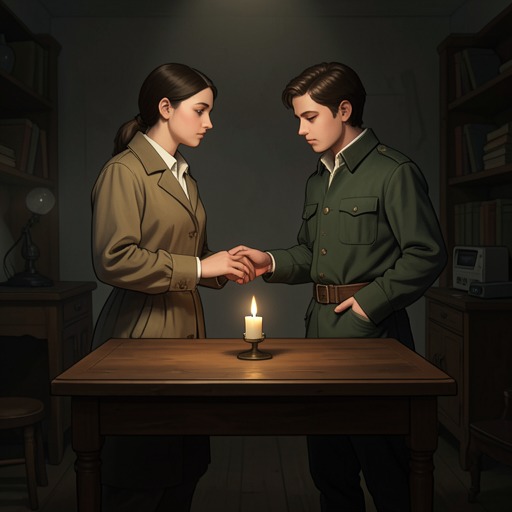
During the siege of [Granada](entity:location-recall-location-granada-01b059371b6e), a fire tears through the Spanish camp and leaves five-year-old [Catalina of Aragon](entity:character-recall-character-catalina-of-aragon-9ff9d9108b52) terrified and alone. [Isabella of Castile](entity:character-recall-character-isabella-of-castile-83d1a888bfb2) rides into the blaze in armor, telling her daughter that the army comes first and that she must remain with her nurse.
[Catalina](entity:character-recall-character-catalina-da71756232ba) suppresses her fear and insists that she was not afraid. The episode becomes an early lesson in her mother’s hard ideal of royal duty: a princess must master private feeling and serve the cause before herself.
1491
The City of Santa Fe
After fire destroys the Spanish camp, the generals urge [Isabella of Castile](entity:character-recall-character-isabella-of-castile-83d1a888bfb2) and [Ferdinand II of Aragon](entity:character-recall-character-ferdinand-ii-of-ara-530f5ce6a143) to retreat for the season. Isabella refuses to let defeat dictate the campaign and declares that the army will build a city from the surrounding stone.
The soldiers labor until [Santa Fe](entity:location-recall-location-c1e0d146dc2d) rises beside the besieged [Granada](entity:location-recall-location-granada-01b059371b6e). [Catalina](entity:character-recall-character-catalina-da71756232ba) watches her mother turn disaster into an enduring base for the siege, strengthening the child’s conviction that Isabella’s determination and God’s will are inseparable.
During the siege of Granada in 1491
Hernando’s Raid
[Hernando Pérez del Pulgar](entity:character-recall-character-hernando-p-rez-del-f4e56cd0301c) tells [Catalina](entity:character-recall-character-catalina-da71756232ba) of a plan to enter the [Alhambra](entity:location-recall-location-alhambra-2fc50b93460d), pray in its mosque, and leave an Ave Maria stabbed to the floor. She is too young to understand the danger and eagerly promises not to tell her mother.
She waits awake for Hernando’s return, then fears he has died when he does not appear the next morning. He eventually returns unharmed and recounts the successful raid, but Catalina retains the first unsettling knowledge that brave men can fail to come home.
During the siege of Granada in 1491
The Queen’s Skirmish
The [Moors](entity:character-recall-character-d99b4041277f) answer Hernando’s raid by sending their champion [Yarfe](entity:character-recall-character-yarfe-0c9baae79f53) to challenge him. [Isabella of Castile](entity:character-recall-character-isabella-of-castile-83d1a888bfb2) prays on a rooftop with her daughters while her champion [Garallosco de la Vega](entity:character-recall-character-garallosco-de-la-ve-af713779af5d) takes the field against the formidable opponent.
De la Vega wins by using a hidden dagger after being overpowered in the fight. When the Moorish force advances, Isabella remains on her knees rather than flee, and the Spanish victory deepens [Catalina](entity:character-recall-character-catalina-da71756232ba)’s belief that faith requires courage even when the outcome is uncertain.
6 January 1492
Granada’s Surrender
After the defeat of their champion and the tightening siege, [Granada](entity:location-recall-location-granada-01b059371b6e)’s rulers accept terms. [Boabdil](entity:character-recall-character-boabdil-8e74e8a86e29) delivers the keys of the [Alhambra](entity:location-recall-location-alhambra-2fc50b93460d) to [Isabella of Castile](entity:character-recall-character-isabella-of-castile-83d1a888bfb2) and [Ferdinand II of Aragon](entity:character-recall-character-ferdinand-ii-of-ara-530f5ce6a143), ending Moorish rule in the city.
[Catalina](entity:character-recall-character-catalina-da71756232ba) enters the palace and discovers a world of gardens, fountains, courtyards, and learning unlike anything she has known. The beauty makes her feel newly favored by God, while the memory of Boabdil’s loss gives her a first glimpse of the human cost of conquest.
1492 and the months following Granada’s surrender
The Conquerors’ Palace
The Spanish royal family adopts the [Alhambra](entity:location-recall-location-alhambra-2fc50b93460d)’s luxurious rooms, baths, gardens, and customs. [Catalina](entity:character-recall-character-catalina-da71756232ba) delights in its architecture and scholarship and recognizes that the conquered people possess a culture more refined than that of many Christian courts.
The new rulers break the promise of coexistence: Jews are expelled and Muslims are pressured to convert or face persecution. Catalina admires the palace while seeing the widening gulf between its inscriptions of justice and the coercive rule imposed by her own family.
Childhood through 1501
A Princess Sent Abroad
[Catalina](entity:character-recall-character-catalina-da71756232ba) has been promised to [Arthur, Prince of Wales](entity:character-recall-character-arthur-prince-of-wa-310063ca63fc), since early childhood and grows up expecting to become Queen of [England](entity:location-recall-location-england-b153c1f368ea). Her parents present the marriage as both a political alliance and a duty entrusted to her by God.
She is raised amid campaigns, court rituals, and the example of [Isabella of Castile](entity:character-recall-character-isabella-of-castile-83d1a888bfb2), yet the [Alhambra](entity:location-recall-location-alhambra-2fc50b93460d) becomes the home she must eventually leave. Her confidence in her destiny makes the prospect of departure bearable, though she does not yet understand how permanent the separation will be.
Before Catalina’s arrival in England in 1501
The Price of the Match
At the insistence of her parents, [Edward Plantagenet, Duke of Warwick](entity:character-recall-character-edward-plantagenet-a962881ce600), is executed to remove a potential rival to the English succession before [Catalina](entity:character-recall-character-catalina-da71756232ba) is sent to marry Arthur. The young princess understands that an innocent man has died to secure the future promised to her.
She privately prays for forgiveness and fears that a marriage founded on his blood may bring sorrow in its wake. Her guilt will remain with her as she tries to make the alliance and her royal position endure.
Autumn 1501
The King Forces an Audience
At [Dogmersfield Palace](entity:location-recall-location-605966c90486), [Henry VII of England](entity:character-recall-character-henry-vii-of-englan-3b0893d4637d) defies the Spanish household’s rules of seclusion and demands to see [Catalina](entity:character-recall-character-catalina-da71756232ba) before her wedding. When her duenna resists, he threatens to enter her chamber himself.
Catalina reveals her face and meets the king’s brusqueness with composure and sharp replies. [Arthur, Prince of Wales](entity:character-recall-character-arthur-prince-of-wa-310063ca63fc), arrives shortly afterward, shy and overwhelmed; the contrast between his gentleness and his father’s force shapes Catalina’s first impressions of the English court.
Autumn 1501, on the journey to London
Harry’s Welcome
Prince Harry meets [Catalina](entity:character-recall-character-catalina-da71756232ba) on the road and greets her with eager affection, immediately treating her as a sister. He boasts about his gifts and abilities, while she responds with amused politeness and begins to see how readily he seeks admiration.
[Edward Stafford, Duke of Buckingham](entity:character-recall-character-edward-stafford-duk-f48edbc3ffc1), welcomes her in Castilian and offers himself as a friend in [England](entity:location-recall-location-england-b153c1f368ea). Harry’s warmth and [Buckingham](entity:location-recall-location-buckingham-a26b2e7d3fa7)’s courtesy soften Catalina’s anxiety, even as she remains focused on the marriage arranged for her.
14 November 1501
The Wedding at St Paul’s
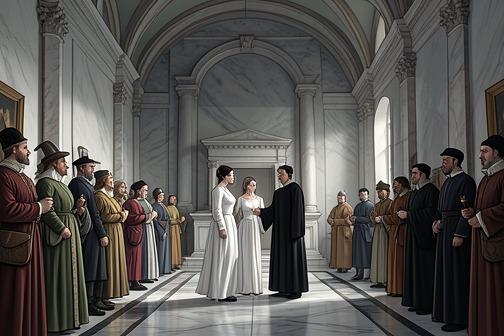
[Catalina and Arthur](entity:relation-recall-relation-catalina-49d2c41f66c4) are married at [St Paul’s Cathedral](entity:location-recall-location-cbbe38023b03) in an elaborate ceremony designed to display the alliance between [England](entity:location-recall-location-england-b153c1f368ea) and [Spain](entity:location-recall-location-spain-336a02c89dc7). Harry escorts the bride down the long aisle, while [Henry VII of England](entity:character-recall-character-henry-vii-of-englan-3b0893d4637d) and [Margaret Beaufort](entity:character-recall-character-margaret-beaufort-3f0e598ca145) regard the marriage as a foundation for Tudor security and future heirs.
The celebration confirms [Catalina](entity:character-recall-character-catalina-da71756232ba)’s long-held title as Princess of [Wales](entity:location-recall-location-wales-caac7a868991), but the newlyweds barely speak amid the public spectacle. For the court, the marriage is a political triumph; for the young couple, it is the beginning of an uncertain private life.
The night of 14 November 1501
An Awkward Wedding Night
After a public bedding ceremony, Arthur and [Catalina](entity:character-recall-character-catalina-da71756232ba) are left alone, frightened and inexperienced. Catalina takes the initiative because she knows what is expected of them, and Arthur completes the act clumsily, relieved that he has fulfilled his duty.
Afterward, Catalina privately considers the encounter painful and embarrassing rather than pleasurable. Arthur’s boast to his companions that he has spent the night in [Spain](entity:location-recall-location-spain-336a02c89dc7) deepens her resentment and exposes the gulf between her solemn understanding of marriage and the court’s coarse jokes.
Winter 1501
Farewell to the Spanish Household
After the wedding celebrations, [Catalina](entity:character-recall-character-catalina-da71756232ba)’s Spanish escort is sent home, leaving her among unfamiliar people and customs. She writes to [Isabella of Castile](entity:character-recall-character-isabella-of-castile-83d1a888bfb2) about [England](entity:location-recall-location-england-b153c1f368ea)’s cold, poor bathing arrangements, food, and lack of privacy, while insisting that she will fulfill her duties.
When [Henry VII of England](entity:character-recall-character-henry-vii-of-englan-3b0893d4637d) finds her grieving beside the river, he distracts her with his library and maps, then lets her choose jewels. Catalina is grateful for his attention and begins to mistake his special favor for a kind of familial affection.
Late 1501
A Marriage Under Inspection
[Catalina and Arthur](entity:relation-recall-relation-catalina-49d2c41f66c4) establish separate households at Baynard’s Castle and meet formally at dinner. Their marital visits are regulated by [Margaret Beaufort](entity:character-recall-character-margaret-beaufort-3f0e598ca145), while every servant and courtier watches for evidence that an heir has been conceived.
When [Catalina](entity:character-recall-character-catalina-da71756232ba)’s monthly course begins, her household informs Arthur’s servants that he must stay away. The news spreads through the court and turns their private marriage into public speculation about whether Arthur can perform his dynastic role.
Christmas 1501
The Oxford Humiliation
On the journey toward [Ludlow](entity:location-recall-location-ludlow-2371257641e7), Arthur announces publicly that he will visit [Catalina](entity:character-recall-character-catalina-da71756232ba)’s room, embarrassing her before the court. She answers by remaining dressed and surrounded by her women; when Arthur insists, she slips into bed beside him only after he has fallen asleep.
Arthur feels mocked and vows never again to share her bed voluntarily. Their outward courtesy conceals a growing estrangement, and Catalina’s pride turns a misunderstanding into a contest neither knows how to resolve.
Late December 1501, on the road to Ludlow
The Snowbound Reconciliation
Arthur rides ahead through worsening snow while [Catalina](entity:character-recall-character-catalina-da71756232ba) shivers inside her litter. When the party finally arrives, she is blue-lipped and sobbing that she may die in this strange country without seeing her mother again.
Seeing her distress, Arthur realizes that he has been cruel. He warms her hands, carries her inside, and apologizes; she in turn apologizes for the [Oxford](entity:location-recall-location-b9ad172b45f4) episode. Their mutual admission of fault gives them a way back to one another.
Late December 1501
The Moorish Supper
In Ledeau, Caterina arranged a private dinner to remind her of her homeland: low cushions, few courses, fragrant perfumes, and Moorish clothing beneath thin silk shirts. She told Arthur about the [Alhambra](entity:location-recall-location-alhambra-2fc50b93460d) and the customs of her childhood, rather than pretending she could easily
Winter 1501–1502
Secret Lovers at Ludlow
Although [Margaret Beaufort](entity:character-recall-character-margaret-beaufort-3f0e598ca145) limited the official visitation time of the two, Catherine and Arthur still secretly met through the gate leading to the castle's ramparts. They spent the nights together, telling each other stories and discussing plans, while the court believed they met rarely
Early 1502
Margaret Pole’s Forgiveness
Margaret of Burgundy returned to [Ludlow](entity:location-recall-location-ludlow-2371257641e7). Catherine was afraid to meet Lord Warwick, Edward Plantagenet's sister; it was precisely his execution that cleared the way for her marriage. She was worried that Margaret would blame her and her parents for this death
Spring 1502
The Unsent Letters
The cold weather and rain forced [Catalina](entity:character-recall-character-catalina-da71756232ba) to stay indoors. She longed for [Spain](entity:location-recall-location-spain-336a02c89dc7) and repeatedly considered requesting to return to visit her mother. She finally destroyed the letter, not sending it out, because she did not want to abandon the self-restraint taught to her by [Queen Isabella of Castile](entity:character-recall-character-b443722f0ede)
March 1502
Arthur Falls Ill
After a close night together, Arthur awoke feverish and weak. [Catalina](entity:character-recall-character-catalina-da71756232ba) worried he had contracted the [English sweating sickness](entity:state-recall-state-english-sweating-sickne-f878c5920494). She recalled her brother, [Prince Juan](entity:character-recall-character-3dbb0838ab81), who had died quickly. The physicians only gave vague assurances, not allowing her to stay by Arthur's bedside
2 April 1502
Arthur’s Deathbed Request
Arthur knew he was about to die, so he told Catherine that she must remain in [England](entity:location-recall-location-england-b153c1f368ea) as queen. He asked her to marry Harry, bear the child they had planned to have, and rule the country in a way that would allow him to live through her. He instructed her to claim that their
April 1502
Arthur’s Funeral
Arthur died after receiving the last rites. Catherine was carried to her bed and became a widow at the age of sixteen. She was so grief-stricken that she could not speak, retreating from the world. The court was worried that her sorrow would overwhelm her
May 1502
The Dowager’s Title
At Ledeau, [Margaret Pole](entity:character-recall-character-1bb5a920c120) explained to Catherine that she is now a widowed queen, no longer the reigning Duchess of [Wales](entity:location-recall-location-wales-caac7a868991). This title shocked Catherine; she heard in it the loss of her status and worried that she might be sent back to [Spain](entity:location-recall-location-spain-336a02c89dc7) or married to someone else. Catherine decided to
Spring 1502
Isabella’s Business Letter
At Kew Palace, Catherine received a short letter from [Queen Isabella of Castile](entity:character-recall-character-b443722f0ede). The letter treated her situation as a dowry, a widow's property protection, and an inheritance issue: if she was not pregnant, she should ensure she received her money and return to [Spain](entity:location-recall-location-spain-336a02c89dc7); if she was
Summer 1502
The Claim of Nonconsummation
[Catalina](entity:character-recall-character-catalina-da71756232ba) told Donna Elvira to inform the Spanish court that her marriage to Arthur had never consummated and that she remained a virgin. She believed that this statement would pave the way for her to marry Harry and preserve her position in the English line of succession. Donna Elvira doubted
1502–1503
A Year in Limbo
[Catalina](entity:character-recall-character-catalina-da71756232ba) spent her year of mourning in poverty and political uncertainty. King [Henry VII of England](entity:character-recall-character-henry-vii-of-englan-3b0893d4637d) withheld all the dowry funds for the widow's protection until the issue was resolved, while [Spain](entity:location-recall-location-spain-336a02c89dc7) and [England](entity:location-recall-location-england-b153c1f368ea) quarreled over money, and neither provided enough funds to maintain the expenses of her household. Margaret
February 1503
Elizabeth of York Dies
a royal messenger announced that [Elizabeth of York](entity:character-recall-character-elizabeth-of-york-cf73e90f5f95) died after giving birth to a son who died shortly thereafter. Catherine prayed for the gentle queen and mourned the death of the only royal woman who had ever shown her kindness in the court. after elizabeth of york's death, margaret beaufort's
2 April 1503
The First Anniversary
On the first anniversary of Arthur's death, [Catalina](entity:character-recall-character-catalina-da71756232ba) spent the whole day alone in the chapel, unable to feel that God had heard her prayers. She prayed for guidance, seeking to know how to keep her promise and become queen, but received no answer
May 1503
Henry VII’s Proposal
King [Henry VII of England](entity:character-recall-character-henry-vii-of-englan-3b0893d4637d) came to visit Catherine, proposing to marry her himself. He presented this marriage as a way to resolve the dispute over dower and to maintain the Spanish alliance, while his growing desire for the young widow became increasingly evident
May 1503
Catalina Rejects the King
[Henry VII](entity:character-recall-character-1ab93d0f1f45) explains that any children he has with [Catalina](entity:character-recall-character-catalina-da71756232ba) would not displace Harry in the succession. He expects her to live under [Margaret Beaufort](entity:character-recall-character-margaret-beaufort-3f0e598ca145)’s authority and denies that she will share his rule.
Catalina concludes that this would make her queen in name but not the queen Arthur intended. She refuses the arrangement through the Spanish ambassador and insists that her proper future is marriage to Harry, despite the risk of provoking the king.
25 June 1503
Harry’s Betrothal
[Henry VII of England](entity:character-recall-character-henry-vii-of-englan-3b0893d4637d) agrees to a betrothal between Harry and [Catalina](entity:character-recall-character-catalina-da71756232ba), with the boy’s marriage postponed until he is older. Catalina regards the agreement as a return to the destiny she has defended, while the king warns Harry that the Spanish may still exploit [England](entity:location-recall-location-england-b153c1f368ea).
Catalina sees the betrothal as the first practical step toward becoming queen and honoring Arthur. Yet the political agreement remains vulnerable to money, shifting alliances, and [Henry VII](entity:character-recall-character-1ab93d0f1f45)’s resentment at having been denied Catalina himself.
1504
The Betrothal Stalls
Harry reaches the age at which [Catalina](entity:character-recall-character-catalina-da71756232ba) expects their betrothal to be formalized, but no one invests her as Princess of [Wales](entity:location-recall-location-wales-caac7a868991). The English court cites the unpaid dowry, while Catalina knows her father has withheld the money and she has little power to force either side to act.
Her mother’s rare letters offer no comfort, and Catalina fears that she has become irrelevant. The years of waiting begin to erode her confidence, even as she remains determined not to abandon the future she was promised.
During the years before 1509
The Betrothal Is Secretly Broken
[Catalina](entity:character-recall-character-catalina-da71756232ba) learns from [Gutierre Gómez de Fuensalida](entity:character-recall-character-gutierre-g-mez-de-f-0576378f621d) that Harry may have sworn he was underage or acting under pressure when he made his betrothal vow. The declaration could release him from the promise, though Catalina had believed it remained binding throughout her years of waiting.
The revelation makes her feel that she has fought alone for a cause already abandoned by the English court. She suspects [Margaret Beaufort](entity:character-recall-character-margaret-beaufort-3f0e598ca145) and [Henry VII](entity:character-recall-character-1ab93d0f1f45) knew the truth, while her father may also have accepted the change in plans.
Before April 1509
The Dowry Is Removed
[Gutierre Gómez de Fuensalida](entity:character-recall-character-gutierre-g-mez-de-f-0576378f621d) arranges for [Catalina](entity:character-recall-character-catalina-da71756232ba)’s remaining dowry treasure to be shipped out of [England](entity:location-recall-location-england-b153c1f368ea) on orders from her father, who has given up hope of her marriage. Catalina discovers that her ambassador has emptied her treasury without securing her escape.
She denounces him as a traitor, only to learn that [Ferdinand II of Aragon](entity:character-recall-character-ferdinand-ii-of-ara-530f5ce6a143) ordered the gold saved but gave no instruction to rescue his daughter. The news confirms Catalina’s isolation and leaves her a penniless hostage in England.
21 April 1509
The King’s Death
[Henry VII of England](entity:character-recall-character-henry-vii-of-englan-3b0893d4637d) dies, ending the reign of the king who had both courted and punished [Catalina](entity:character-recall-character-catalina-da71756232ba). His death opens the succession to Harry, whom Catalina knows from years of observation and whose vanity and affection may still offer her a chance.
Rather than accept the ambassador’s offer to take her home, Catalina decides to stay in [England](entity:location-recall-location-england-b153c1f368ea). She believes that leaving would mean losing any remaining possibility of becoming queen and of keeping her promise to Arthur.
April 1509
Henry VIII Takes the Throne
[Henry VIII](entity:character-recall-character-henry-viii-bebc59c40e44) succeeds his father and announces that he intends to marry [Catalina](entity:character-recall-character-catalina-da71756232ba). The [Privy Council](entity:organization-recall-organization-privy-council-6e8b9d4851e9) sets aside the old dowry dispute, seeing the marriage as a means to secure [Spain](entity:location-recall-location-spain-336a02c89dc7)’s support against [France](entity:location-recall-location-france-f5cafc8a8ad4).
After years of neglect, Catalina is summoned back into the center of power. She has achieved the marriage she sought, but the young king’s motives combine political advantage, admiration, and desire rather than any understanding of her devotion to Arthur.
11 June 1509
The Marriage at Greenwich
[Catalina](entity:character-recall-character-catalina-da71756232ba) marries [Henry VIII](entity:character-recall-character-henry-viii-bebc59c40e44) in a small ceremony at [Greenwich Palace](entity:location-recall-location-greenwich-palace-d91d413ae466). The court avoids the elaborate public bedding that accompanied her first wedding, and the bride and groom are left to face their first night together privately.
Catalina tells Henry that Arthur was too weak to consummate their marriage and presents herself as a virgin. The lie, made to fulfill Arthur’s deathbed request, becomes the foundation of her new marriage and the political future she has fought to secure.
Night of 11 June 1509
Blood on the Wedding Sheets
[Henry VIII](entity:character-recall-character-henry-viii-bebc59c40e44) and [Catalina](entity:character-recall-character-catalina-da71756232ba) approach their wedding night as inexperienced young spouses. Catalina makes the encounter seem like her first, but Henry senses that something is not as it should be and wonders whether she is telling the truth.
Before dawn, Catalina cuts the sole of her foot and leaves blood on the sheet. The small wound helps her sustain the story before the court, while the physical reminder follows her into a marriage built on an unspoken deception.
Summer 1509
The Queen Takes Charge
During the early months of their marriage, [Henry VIII](entity:character-recall-character-henry-viii-bebc59c40e44) devotes himself to tournaments, hunting, and entertainments. [Catalina](entity:character-recall-character-catalina-da71756232ba) gradually assumes responsibility for the household, correspondence, petitions, and royal business, presenting decisions to the king in ways that preserve his sense of authority.
The [Privy Council](entity:organization-recall-organization-privy-council-6e8b9d4851e9) learns to consult her before approaching Henry. Catalina sees this as a way to guide him toward the country she and Arthur had imagined, while also making herself indispensable to the king.
June 1509
Beaufort’s Funeral and the Coronation
[Margaret Beaufort](entity:character-recall-character-margaret-beaufort-3f0e598ca145) dies shortly after [Henry VIII](entity:character-recall-character-henry-viii-bebc59c40e44)’s accession. [Catalina](entity:character-recall-character-catalina-da71756232ba) uses the [Royal Book](entity:object-recall-object-royal-book-b1762d3c0b83) to organize a dignified funeral, reducing the scale of the ceremony that Margaret had planned for herself while securing the new queen’s position at court.
The coronation proceeds on 24 June. Catalina receives the holy oil and the insignia of queenship, but the sight of Henry beside her makes her understand that Arthur is truly gone and that she must live as Henry’s wife rather than as the bride she once expected to crown.
Late 1509 to spring 1510
The False Twin Pregnancy
[Catalina](entity:character-recall-character-catalina-da71756232ba) becomes pregnant and experiences bleeding that ends in the delivery of a dead baby girl. Her physician insists that she is carrying a surviving twin, and the court accepts his diagnosis despite Catalina’s doubts and the absence of convincing signs.
She spends months in confinement, hoping the remaining child will be a boy and fearing that the pregnancy is not real. The error exposes the weakness of English medical practice and leaves the queen dependent on physicians who seem more willing to reassure the king than to tell her the truth.
During the false pregnancy in 1510
Yusuf’s Diagnosis
[María de Salinas](entity:character-recall-character-mar-a-de-salinas-aeedbf7e630b) secretly brings [Yusuf](entity:character-recall-character-1cb173d39032), a Muslim physician, to examine [Catalina](entity:character-recall-character-catalina-da71756232ba) after her bleeding resumes. He explains that the signs point to an empty womb rather than a surviving child and refuses to soften his judgment merely to please the queen.
Catalina rejects his conclusion and his faith, but his compassion and knowledge unsettle her assumptions about the [Moors](entity:character-recall-character-d99b4041277f). His visit begins her gradual recognition that religious prejudice has deprived Christian courts of valuable learning.
May 1510
The Pregnancy Ends
When [Catalina](entity:character-recall-character-catalina-da71756232ba)’s belly diminishes and her monthly course returns, she acknowledges that there is no surviving child. She tells [Henry VIII](entity:character-recall-character-henry-viii-bebc59c40e44) that the physician was mistaken and leaves confinement without a birth or a christening.
Henry focuses on the humiliation of having been made to look foolish, while Catalina faces her own grief and doubts about whether God is punishing her. She continues to conceal [Yusuf](entity:character-recall-character-1cb173d39032)’s warning and tries to preserve the marriage’s fragile trust.
During Catalina’s confinement in 1510
Henry’s Affair with Anne Stafford
While [Catalina](entity:character-recall-character-catalina-da71756232ba) is secluded, [Henry VIII](entity:character-recall-character-henry-viii-bebc59c40e44) begins an affair with [Anne Stafford](entity:character-recall-character-50011590c8fc), with [William Compton](entity:character-recall-character-ed9c96fed72d) serving as a social cover. The Duke of [Buckingham](entity:location-recall-location-buckingham-a26b2e7d3fa7)’s anger and the abrupt departure of his sisters expose the scandal’s reach through court and household.
Catalina confronts Henry privately after her return. He admits that Anne’s claim that Catalina might not have been a virgin made him doubt the validity of their marriage, and Catalina counters by defending her honor and warning that rumors about queens threaten the legitimacy of the dynasty.
Late spring 1510
A Second Pregnancy
After reconciling with Henry, [Catalina](entity:character-recall-character-catalina-da71756232ba) misses her monthly course and believes she is pregnant again. Henry is delighted and hopes the child will prove the strength of their marriage after the earlier false report.
Catalina hides her anxiety, remembering [Yusuf](entity:character-recall-character-1cb173d39032)’s judgment and the recent loss. She resumes public duties while privately hoping this child will survive and become the heir [England](entity:location-recall-location-england-b153c1f368ea) needs.
1 January 1511
The Birth of Prince Henry
After labor begins on New Year’s Eve, [Catalina](entity:character-recall-character-catalina-da71756232ba) gives birth to a healthy boy. [Henry VIII](entity:character-recall-character-henry-viii-bebc59c40e44) visits the infant in wonder, marveling at his tiny hands and feet, while the country celebrates the arrival of a male Tudor heir.
Catalina names the child Prince Henry and privately imagines him as the son she had promised Arthur. She is overjoyed that the dynasty has an heir and believes her years of endurance have finally borne fruit.
Early 1511
The Sir Loyal Heart Tournament
[Henry VIII](entity:character-recall-character-henry-viii-bebc59c40e44) stages a lavish tournament to celebrate the birth of his son. He enters the lists under the motto “Sir Loyal Heart,” surrounded by banners bearing the entwined initials of himself and [Catalina](entity:character-recall-character-catalina-da71756232ba).
Catalina reads the display as a public declaration that Henry is devoted to her. The pageant restores her confidence after his affair and makes her believe that their marriage can protect both her position and the child’s future.
22 February 1511
The Prince Dies
Ten days after the tournament, Prince Henry dies. [Catalina](entity:character-recall-character-catalina-da71756232ba) shuts herself away, unable to reconcile the loss of a child she had imagined would secure [England](entity:location-recall-location-england-b153c1f368ea)’s future and carry forward the plans she shared with Arthur.
[Margaret Pole](entity:character-recall-character-1bb5a920c120) comes to her and apologizes for the child’s death, though she had done nothing wrong. Catalina initially resents her presence, then breaks down in her arms and begins the long work of learning to survive grief again.
1511
The Crusade Diverts to Italy
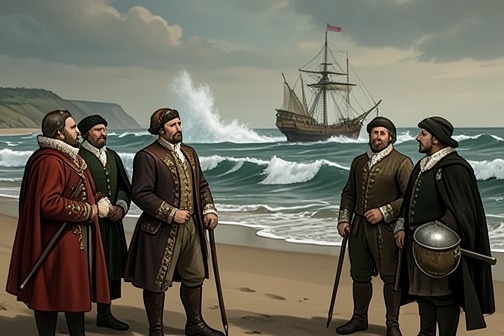
[Ferdinand II of Aragon](entity:character-recall-character-ferdinand-ii-of-ara-530f5ce6a143) invites English nobles to join a campaign against the [Moors](entity:character-recall-character-d99b4041277f) in [Africa](entity:location-recall-location-africa-7f6149c69b08). [Henry VIII](entity:character-recall-character-henry-viii-bebc59c40e44) eagerly embraces the prospect, but the planned expedition never reaches its destination as the conflict shifts toward the French advance in [Italy](entity:location-recall-location-italy-85c2492cd54b) and the defense of the Pope.
[Catalina](entity:character-recall-character-catalina-da71756232ba) supports the alliance and translates correspondence between [England](entity:location-recall-location-england-b153c1f368ea) and [Spain](entity:location-recall-location-spain-336a02c89dc7). Her faith in the crusading cause remains strong, though the loss of her son has weakened her confidence that victory and divine favor are assured.
Summer 1511
A New View of the Moors
As she recovers from grief, [Catalina](entity:character-recall-character-catalina-da71756232ba) revisits her beliefs about the [Moors](entity:character-recall-character-d99b4041277f) and remembers [Yusuf](entity:character-recall-character-1cb173d39032)’s honesty and kindness. She begins to doubt the claim that their learning is sinful simply because it was developed outside Christian institutions.
She recognizes that [Isabella of Castile](entity:character-recall-character-isabella-of-castile-83d1a888bfb2)’s religious policies expelled scholars along with heretics and that coercion damaged the very country her parents had built. Catalina no longer sees every Muslim as an enemy and begins to separate faith from cruelty and political ambition.
Summer 1511
Barton’s Capture
Scottish privateer Andrew Barton attacks English shipping, prompting [Edward Howard](entity:character-recall-character-edward-howard-d35e8638200e) to pursue him at sea. Edward captures Barton and brings the victory back to [London](entity:location-recall-location-london-420923d4a60a), where the young admiral is celebrated as a national hero.
[Catalina](entity:character-recall-character-catalina-da71756232ba) sees maritime power as essential to [England](entity:location-recall-location-england-b153c1f368ea)’s security and urges Henry to take the threat seriously. The success also intensifies the king’s desire for war and reveals that [Scotland](entity:location-recall-location-scotland-4e112aa71aa3) remains a danger despite the marriage alliance with [Margaret Tudor](entity:character-recall-character-margaret-tudor-b2a0fd53d9fa).
1511
The Pope Checks Scotland
As Scottish raids grow bolder, [Catalina](entity:character-recall-character-catalina-da71756232ba) writes to [Richard Bainbridge](entity:character-recall-character-richard-bainbridge-493780209ce0), describing the threat and its potential to distract [England](entity:location-recall-location-england-b153c1f368ea) from the alliance defending the Pope. Her carefully worded appeal prompts papal intervention against [James IV of Scotland](entity:character-recall-character-james-iv-of-scotlan-12af0ec30000).
James protests that [Henry VIII](entity:character-recall-character-henry-viii-bebc59c40e44) has appealed behind his back, while Henry is surprised to learn that Catalina’s letter helped bring pressure to bear. The episode demonstrates her ability to use diplomacy and religious authority to protect England without openly challenging her husband.
1512
The English Expedition to Spain
An English force sails to [Fuenterrabia](entity:location-recall-location-fuenterrabia-c5174352eee1) to join [Ferdinand II of Aragon](entity:character-recall-character-ferdinand-ii-of-ara-530f5ce6a143)’s campaign against [France](entity:location-recall-location-france-f5cafc8a8ad4). [Catalina](entity:character-recall-character-catalina-da71756232ba) helps prepare the fleet and army, confident that the alliance will restore English power in France and protect the Pope.
The troops wait through the hot summer without receiving orders to fight. Ferdinand instead uses their presence to pin down French forces while he conquers [Navarre](entity:location-recall-location-navarre-b7f09ea1144f), leaving the English to suffer illness, hunger, and declining morale.
1512
Ferdinand Takes Navarre
[Catalina](entity:character-recall-character-catalina-da71756232ba) realizes that [Ferdinand II of Aragon](entity:character-recall-character-ferdinand-ii-of-ara-530f5ce6a143) has kept the [English army](entity:organization-recall-organization-3d9041679f94) idle as a diversion while he advances into [Navarre](entity:location-recall-location-navarre-b7f09ea1144f). When the English force returns home in disorder, [Henry VIII](entity:character-recall-character-henry-viii-bebc59c40e44) is furious and blames its commander.
Catalina explains that the army’s inaction served Ferdinand’s purpose and that [England](entity:location-recall-location-england-b153c1f368ea) has been used to secure the conquest. She advises Henry to treat the treaty as a continuing bargain: Ferdinand must now help England against [France](entity:location-recall-location-france-f5cafc8a8ad4), rather than receive further assistance without payment.
Spring 1513
Edward Howard Dies at Brest
During the attack on the French fleet at [Brest](entity:location-recall-location-brest-35cd7ab517ed), [Edward Howard](entity:character-recall-character-edward-howard-d35e8638200e) grows impatient with the blockade and leads a dangerous boarding attempt. His men retreat, leaving him surrounded; he dies fighting aboard the enemy ship.
The French throw his body into the sea, then recover it for ransom and mutilate it before sending remnants home. [Catalina](entity:character-recall-character-catalina-da71756232ba) is devastated and sees the cruelty as a rebuke to the Christian chivalry she had imagined, further weakening her belief that religious identity guarantees virtue.
Summer 1513
Henry Crosses to France
[Henry VIII](entity:character-recall-character-henry-viii-bebc59c40e44) prepares to lead an [English army](entity:organization-recall-organization-3d9041679f94) across the Channel, eager to win military glory. [Catalina](entity:character-recall-character-catalina-da71756232ba) and [Thomas Wolsey](entity:character-recall-character-thomas-wolsey-b0310b090d30) organize the muster, supplies, and transport, while Catalina quietly intends to use the king’s absence to settle the northern threat.
At [Dover](entity:location-recall-location-dover-bee6bc10504b), Henry appoints Catalina regent and captain general for home defense. She accepts the [Great Seal of State](entity:object-recall-object-great-seal-of-state-56c0d26eb051) and watches his fleet depart, now holding authority to direct [England](entity:location-recall-location-england-b153c1f368ea)’s defense while he campaigns in [France](entity:location-recall-location-france-f5cafc8a8ad4).
Summer 1513
The Scottish Invasion
With Henry and much of [England](entity:location-recall-location-england-b153c1f368ea)’s army overseas, [James IV of Scotland](entity:character-recall-character-james-iv-of-scotlan-12af0ec30000) invades England, hoping to exploit the kingdom’s vulnerability. [Catalina](entity:character-recall-character-catalina-da71756232ba) orders a new muster, inspects troops in armor, and rides north beneath the royal standard.
Her decision to lead in person unsettles her ladies and courtiers, but the soldiers respond to seeing their queen among them. Catalina believes that withdrawing would destroy their confidence, and she commits herself to defending the country as her mother once defended [Spain](entity:location-recall-location-spain-336a02c89dc7).
September 1513
The Approach to Flodden
[Catalina](entity:character-recall-character-catalina-da71756232ba) learns that the Scottish force may number as many as one hundred thousand and has crossed deep into [England](entity:location-recall-location-england-b153c1f368ea). Rather than panic, she orders the army to continue north and keeps a reserve force ready in case the first [English army](entity:organization-recall-organization-3d9041679f94) is defeated.
When she studies the ground at Flodden, she warns [Thomas Howard, Earl of Surrey](entity:character-recall-character-thomas-howard-earl-2b77c1b649c0), not to attack the Scots uphill. She advises him to draw them from their strong position or maneuver around the ridge, while leaving the field commander free to make his own decision.
10 September 1513
The Victory at Flodden
A messenger brings news that the Scots have been defeated at Flodden and that [James IV of Scotland](entity:character-recall-character-james-iv-of-scotlan-12af0ec30000) is dead, along with many leading nobles and clergy. Surrey credits [Catalina](entity:character-recall-character-catalina-da71756232ba)’s trained and equipped forces with the victory.
Presented with the chance to invade [Scotland](entity:location-recall-location-scotland-4e112aa71aa3) and devastate it, Catalina first considers the familiar logic of conquest. She then refuses, reasoning that destruction would breed another generation of hatred and war.
September 1513
Peace After Victory
[Catalina of Aragon](entity:character-recall-character-catalina-of-aragon-9ff9d9108b52) ordered the defeated Scottish soldiers to surrender and return to their homeland. She wrote a letter to Queen [Margaret Tudor](entity:character-recall-character-margaret-tudor-b2a0fd53d9fa) of [Scotland](entity:location-recall-location-scotland-4e112aa71aa3), stating that if the other side was willing to be neighbors, she would be willing to make peace
Autumn 1513
A Private Message at Walsingham
At [Walsingham](entity:location-recall-location-walsingham-9a5eb4e37263), [Catalina](entity:character-recall-character-catalina-da71756232ba) gives thanks for the victory and speaks inwardly to Arthur, telling him that she has defended [England](entity:location-recall-location-england-b153c1f368ea) and tried to spare [Scotland](entity:location-recall-location-scotland-4e112aa71aa3) from further destruction. She believes she may be pregnant and hopes the child will live.
In her letter to [Henry VIII](entity:character-recall-character-henry-viii-bebc59c40e44), she says that she will go to Our Lady at Walsingham as promised. The phrase serves as a private signal that she believes a child is on the way, allowing her to share the news through a message others may read.
June 1529
The Great Matter Begins
Years later, when [King Henry VIII of England](entity:character-recall-character-114cc7d2e71e) tried to question the validity of the marriage between the two, Catherine of [Aragon](entity:location-recall-location-aragon-ff89e93701bd) was summoned to the special court of the Black Friars Hall. She knew the trial was intended to weaken her and pave the way for a new queen. But she refused to